In enterprise network deployment, PoE, Gigabit wired networks, and wireless networks are often viewed as three separate technical options. However, the true value of modern network architecture lies precisely in the deep integration of these three technologies:
Gigabit Ethernet serves as a high-bandwidth, low-latency wired backbone;
PoE technology sends data and power at the same time over one network cable. It solves the power supply problem for end devices.
Wireless networks provide flexible mobile access.
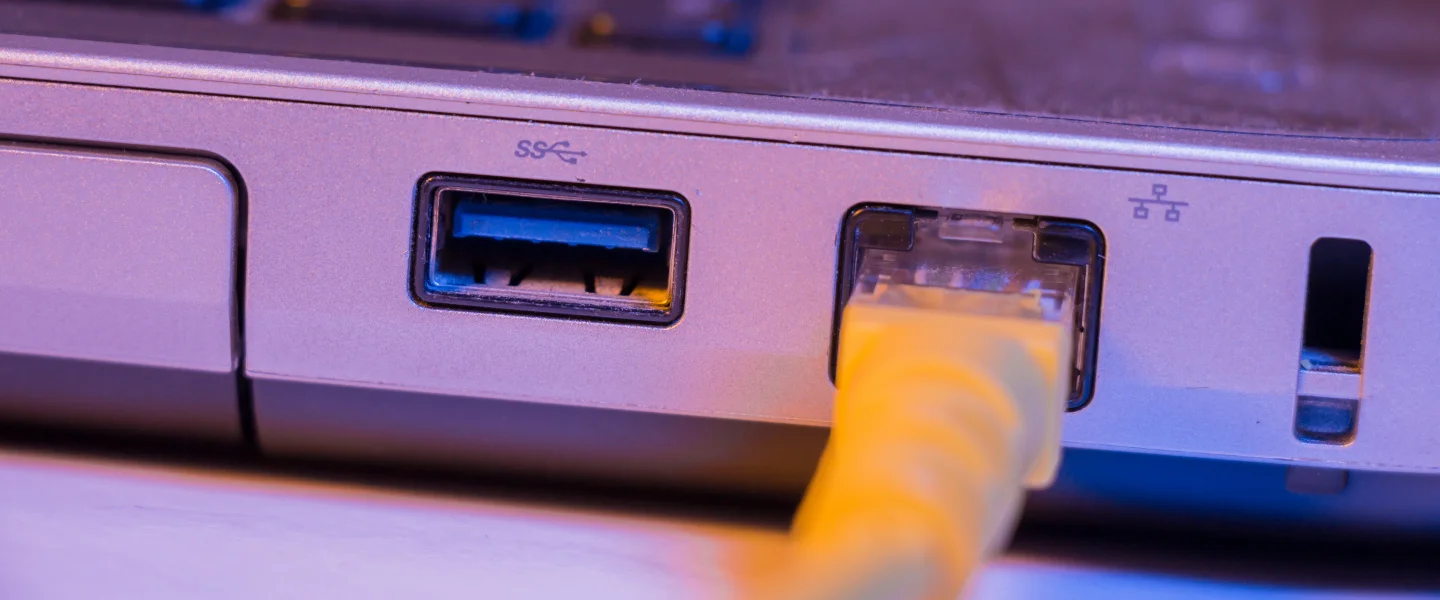
This article compares PoE, Gigabit wired, and wireless networks in four areas. It covers technical features, use cases, combined architectures, and optimization strategies. It helps readers build efficient, reliable, and scalable hybrid networks.
PoE, Gigabit Wired, and Wireless Networks—A Quick Overview of Technical Positioning
|
Comparison Criteria
|
Gigabit Wired Network
|
PoE Power Delivery Network
|
Wireless Network
|
|
Data Transmission
|
1000 Mbps full-duplex—
|
Same as wired (1000 Mbps)
|
Depends on the Wi-Fi standard
|
|
Power Supply Capacity
|
None
|
15.4 W–100 W (depending on the standard)
|
None (requires PoE or separate power supply)
|
|
Deployment Cost
|
Moderate (requires cabling)
|
Low (data and power over a single cable)
|
Low (no wiring required)
|
|
Reliability
|
Very high (wired connection)
|
Very high (wired connection)
|
Moderate (affected by interference and distance)
|
|
Mobility
|
None
|
None
|
High
|
|
Suitable Scenarios
|
Fixed high-bandwidth terminals
|
End devices requiring power
|
Mobile devices, coverage extension
|
In-Depth Comparison of Three Key Technologies: Bandwidth, Power Delivery, Distance, and Reliability
Bandwidth Performance Comparison—Which Is Faster?
Both Gigabit wired networks and PoE switches can forward traffic at line rate within 100 meters. Core performance metrics match non-PoE switches with the same specs.
Key Difference: When a PoE switch uses long-distance power mode, it lowers the link speed to 10 Mbps.
This helps keep power delivery stable.
Multi-Gigabit PoE switches support 2.5G, 5G, and 10G speeds, enabling ultra-Gigabit transmission over existing Cat5e/Cat6 cables.
Wireless network bandwidth depends on signal strength, interference, and how many users are online. Actual throughput is usually much lower than the theoretical value.
Power Supply Capability Comparison—Which Can Power the Devices?
Wired Networks: Cannot supply power; end devices require a separate power source.
PoE Networks: Ranging from 15.4W to 100W, covering all needs from IP phones to Wi-Fi 7 access points. The 802.3bt standard utilizes all four pairs of the Ethernet cable to supply power, providing nearly 100W.
Wireless Networks: Do not provide power themselves, but wireless APs can be powered via PoE.
Selection Guidelines: For high-power devices, you must choose a PoE switch compliant with the 802.3at or 802.3bt standards.
Transmission Distance Comparison — Which Offers Wider Coverage?
Wired/Power over Ethernet: Standard 100 meters.
Wireless: Coverage radius depends on the frequency band, power output, and environment.
Reliability Comparison — Which Is More Stable?
Wired networks provide a physical connection and are not affected by electromagnetic interference or signal obstruction, offering the highest reliability.
Wireless networks are sensitive to environmental factors. Centralized management with an access controller (AC) enables automatic channel allocation. It also supports load balancing and seamless roaming.
Hybrid Network Architecture: Wired as the Backbone, PoE as the Extensions, Wireless as the Extension
Classic Three-Layer Architecture
Campus wired and wireless networks often use a three-layer wired design.
It includes the core, aggregation, and access layers. This is supported by a central “AC+AP” management model. It creates a shared network where wired networks form the backbone, wireless networks then cover the edge.
Wired deterministic technologies suit fixed scenarios, while wireless ones suit mobile scenarios. By combining both, wired stability pairs with wireless flexibility.
The Central Role of PoE in Hybrid Architectures
PoE technology consolidates “data and power” into a single network cable. Making it the most cost-effective and sustainable solution for building hybrid networks.
Methods for Integrating Wired and Wireless Networks
AC+AP Architecture: Wired links use Gigabit Ethernet to connect several APs to a core switch. A PoE router can also be used, this ensures enough bandwidth and low latency.
Wireless Mesh Networking: Core nodes are connected via wired links to ensure stability, while edge nodes extend coverage wirelessly.
Principles for Building Hybrid Networks
When building a hybrid network, the principle of “wired as the foundation, wireless as the extension” must be followed.
A detailed needs analysis is required—clearly defining network coverage, the number of users, application scenarios, and bandwidth requirements.
During equipment deployment, fiber-optic links connect the core switch to access switches. This ensures enough bandwidth for backbone links.
Selecting a PoE Switch: The Heart of a Hybrid Network
Four Criteria for Selection
Power Density: The maximum power per port must be sufficient to support the device with the highest power consumption. And the total PoE budget for the switch must cover the combined power consumption of all devices while allowing for a 20%–30% margin.
Port Density: Select the number of ports based on the number of end devices, leaving room for future expansion.
Uplink Bandwidth: Gigabit downlink ports require 2.5G/10G uplink ports to avoid bandwidth bottlenecks.
Management Capabilities: Support for features such as VLAN, QoS, and PoE watchdog to enable centralized management.
Accurate Calculation of Power Budget
Formula: Total PoE power of the switch ≥ Σ(maximum power consumption of all devices) × 1.2 (redundancy factor).
Note: Some switches have sufficient total power but limited power per port; verify each port individually.
The Value of Multi-Gigabit PoE Switches
Supports 2.5G/5G/10G multi-speed ports to meet the high-bandwidth requirements of Wi-Fi 6/7 APs.
Enables network speed upgrades over existing Cat5e/Cat6 cabling, avoiding large-scale cabling renovations.
Wireless Network Optimization: Enhancing Coverage and User Experience
AP Deployment Optimization
Conduct a professional signal survey. Use it to decide how many APs you need. Place APs based on the building layout. Consider materials and user density.
Install APs on ceilings or walls for even signal coverage, use waterproof, dustproof APs outdoors.
Access Point deployment is rarely perfect on the first try. You should keep adjusting locations. Add or remove APs based on real feedback.
RF Optimization
Adjust wireless channels and transmit power to avoid co-channel interference.
Enable the intelligent RF optimization feature via the Access Controller (AC) to automatically adjust AP transmit power and channels.
Load Balancing and QoS
Configure load balancing to prevent performance degradation caused by too many users connecting to a single AP.
Configure QoS for services with high real-time requirements to ensure priority bandwidth for critical traffic.
Unified Management: Keeping Hybrid Networks “Mixed but Organized”
Network Management Platform
VLAN Isolation and Security Configuration
Fault Diagnosis and Resolution Process
The 6 Most Common Mistakes in Hybrid Network Deployment
Incorrect Power Budget Calculations
Ignoring PoE Speed Reduction Over Long Distances
Mismatch Between Wireless AP Selection and PoE
Wired and Wireless Networks Operating in Isolation
Ignoring Cable Material
Failure to Allow for Future Expansion
6-Step Action Checklist for Hybrid Network Optimization
Define Requirements—Analyze coverage, device types, bandwidth requirements, and mobility needs
Design the Architecture—Determine a three-layer collaborative solution consisting of a “wired backbone + PoE power supply + wireless extension”
Select the Right PoE Switches — Choose based on device power consumption standards. Calculate total power requirements, and allow for a 20%–30% margin
Plan Wireless Coverage — Conduct signal surveys to determine AP locations and quantities, avoiding dead zones and interference
Unified Management and Deployment — Deploy a centralized NMS for monitoring, and configure VLAN isolation and QoS policies
Continuous Testing and Optimization — Conduct regular network performance tests and make ongoing adjustments based on the results
Frequently Asked Questions About Hybrid Networks
Q: In practice, how should tasks be divided between wired and wireless networks?
A: Wired networks form the backbone and support fixed, high-bandwidth terminals. Wireless networks support mobile terminals and extend coverage. Together, they create a shared design where wired is the backbone and wireless is the edge.
Q: In practice, how can a hybrid network be managed centrally?
A: Deploy an NMS for centralized monitoring of devices such as switches and APs. For the wireless portion, use an AC to achieve unified configuration and RF optimization.
Q: Can Power over Ethernet power transmission exceed 100 meters?
A: The Power over Ethernet standard is 100 meters. For longer distances, you can extend the range to 150–200 meters. Do this by reducing the rate to 10 Mbps, you can also use PoE repeaters.
