Selecting the right power supply method for wireless access points is often overlooked in network planning. It can still have far-reaching effects. PoE and DC each have their advantages and disadvantages in terms of deployment flexibility, cost structure, and cabling complexity.
Choose wisely, and the install will go smoothly, choose poorly, and you may face power shortages. You may also have frequent disconnections. You might even need to redo the whole project.
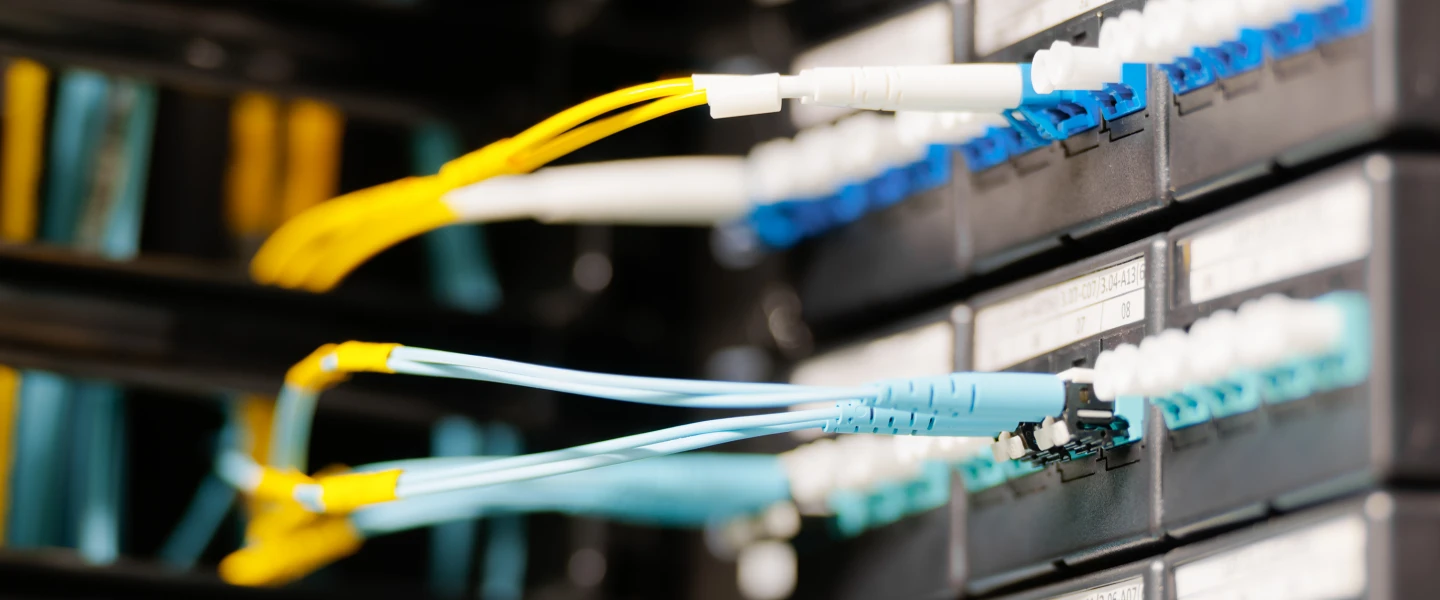
What is the fundamental difference between these two power supply methods?
The core idea of PoE is “one cable, two functions”: it sends data and power at the same time through a standard Ethernet cable.
There are currently three mainstream standards:
IEEE 802.3af (PoE) provides a maximum of 15.4W per port and is suitable for early-generation, low-power APs;
802.3at (PoE+) provides a maximum of 30W per port and is the current mainstream standard for Wi-Fi 5/6 APs;
802.3bt (PoE++), with a maximum of 60W or 90W per port, is designed for high-power APs and outdoor equipment.
PoE power delivery involves an often-overlooked “handshake” process:
The power source first sends a low-voltage pulse to check if the receiving device is compliant. It only supplies power after negotiating the power level.
DC power supply follows the traditional approach:
The AP includes, or may require, a separate power adapter. This adapter converts AC power to the DC voltage the AP needs, it then plugs into the AP’s power port.
The Ethernet cable is used solely for data transmission, while power is delivered via a separate power cable. Some AP models support PoE and DC power inputs. They automatically adjust their functions based on the power source.
Head-to-Head Comparison Across Six Dimensions
Cabling Complexity:
PoE is very simple, it needs one Ethernet cable only, this removes the need for electrical wiring. DC needs both Ethernet and power cables, a power outlet must be near the AP.
Deployment Flexibility:
PoE can be installed in areas without power sources, such as ceilings and high walls. DC is limited by outlet locations and is typically used on desks or specific walls.
Centralized Management Capabilities:
PoE allows for remote reboots and scheduled power-offs via a switch. DC cannot be managed remotely, so if a device freezes, it must be unplugged and replugged on-site.
Initial Setup Costs:
PoE requires the purchase of a PoE switch or injector, presenting a higher entry barrier. DC uses the AP’s built-in adapter, requiring no additional investment in network hardware.
Power Loss and Distance:
PoE typically supports transmission distances up to 100 meters. This depends on the network cable material. DC is limited by low-voltage DC line losses, and excessively long cables can cause voltage drops.
Application Scenarios:
PoE is suitable for corporate offices, hotel hallways, large venues, and outdoor APs. DC is suitable for small offices, home environments, test benches, and locations with existing power outlets.
PoE trades equipment costs for installation efficiency and operational convenience, while DC trades operational convenience for lower procurement barriers and simpler deployment.
Respective Advantages and Disadvantages
The main advantage of PoE is its low installation cost. It removes the need for a high-voltage construction permit and electrical wiring. Labor costs for these steps often exceed the price gap between a PoE switch and a standard switch. It outputs safe, low voltage, minimizing the risk of troubleshooting issues.
When paired with a UPS, it keeps all APs running after a power outage, no individual configuration is needed. Its disadvantage is that it needs high-quality network cables. Category 5e or Category 6 oxygen-free copper cables are recommended.
Additionally, the PoE power budget for the device is limited. If it overloads, lower-priority ports may lose power.
The main advantage of DC power is its low procurement barrier; a standard switch can be used to build the network. Since each AP is powered independently, there is no competition for port power, and fault isolation is more intuitive.
Its disadvantage is that high- and low-voltage circuits are separate. This can look messy and create safety risks. The biggest drawback is that you cannot power off and restart remotely, if an AP freezes, a technician must go to the site.
Recommendations for Selection Based on Scenarios
For dense enterprise or campus deployments, PoE is strongly recommended. When used with managed switches, it supports centralized operation and maintenance.
For outdoor long-distance or special bridging APs, we recommend PoE with a surge protection module. This helps solve power supply issues.
For small SOHO or home environments with a few APs, DC power is a flexible option.
In cases with limited electrical cabinet space, or during retrofits of older networks, you can use mixed power sources. Use them based on the AC outlets available on-site. If needed, use a PoE injector to power individual APs.
Summary
PoE is now the industry standard, it is not because it beats DC in every way.
It is because the key challenge has changed. The focus is no longer “can it be powered? It is now can it be managed efficiently?
As the number of APs grows from a few to dozens, centralized power becomes essential. Remote reboots also become essential. Shared UPS backup becomes essential too. However, DC remains a reasonable choice for small-scale scenarios with few APs, tight budgets, and existing power outlets.
The right way to choose is not to ask, Which is more advanced instead, return to three key questions.
Is the budget better suited for equipment investment or labor costs? Are there existing power outlets at the installation sites? Will on-site maintenance be quick and easy in the long run, once these three questions are clearly answered, the solution will become obvious.
