In the age of the Internet of Things, the RJ45 connector is almost the same as network connectivity. Although it looks like a simple plastic connector, its internal design and structure are impressive. They enable fast data transmission and good electromagnetic compatibility (EMC).
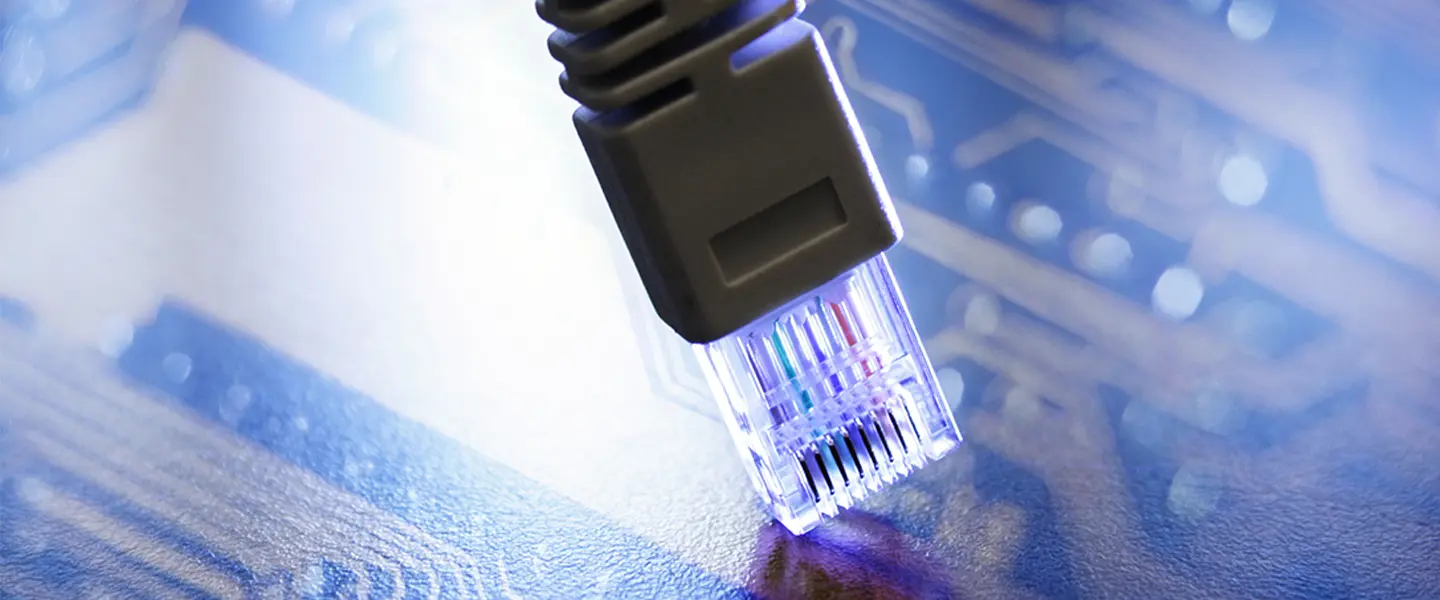
1. Physical Structure: The Precise Layout Behind the Eight Pins
The RJ45 uses an 8P8C (8 Position, 8 Contact) structure. This means it has 8 position slots and 8 metal contact points.
Gold Pins: Manufacturers typically plate internal contacts with 50μ" thick gold to prevent oxidation and ensure low contact resistance.
Splitter Physical Design:
To reduce crosstalk, the twisted pair must remain tightly twisted until the crimp point as it enters the connector. This is the first line of defense for ensuring signal integrity at the physical layer.
2. Core Circuit: MagJack
If you observe the RJ45 sockets on high-end switches or motherboards, you'll notice they are thicker than ordinary sockets. This is because they integrate network isolation transformers (Magnetics), commonly referred to in the industry as MagJacks.
The three core functions of the transformer:
Electrical Isolation:
The IEEE 802.3 standard says the transformer offers insulation protection up to 1500V. This helps prevent damage to the circuitry from ground potential differences between devices.
Common Mode Rejection:
Through differential signal transmission, the transformer effectively cancels out external interference noise.
Impedance Matching:
Ensures that the impedance at both ends of the transmission line is consistent (typically 100Ω), reducing signal reflection.
3. The "Invisible Guardians" in Circuitry
Besides the transformer, the internal circuitry of a modern RJ45 socket includes the following key components:
Bob Smith Termination:
This circuit has resistors and high-voltage capacitors. Engineers use it to remove common-mode noise from the twisted pair.
LED Indicator Circuit:
Used to provide feedback on link status and data activity, typically integrated directly on the front of the socket.
Shielding:
The metal casing connects directly to the PCB's ground plane (GND). This creates a Faraday cage to reduce EMI (electromagnetic interference).
4. The Evolution: From 100Mbps to 10Gbps
With technological advancements, the internal structure of RJ45 sockets has undergone qualitative changes:
|
Specification Types
|
Key Internal Structure Features
|
Application Scenarios
|
|
Cat5e (1Gbps)
|
Standard 8-pin, basic transformer
|
Traditional home networks
|
|
Cat6/6A (10Gbps)
|
Reinforced internal shielding, cross-frame to reduce internal crosstalk
|
Modern office and backbone networks
|
|
PoE (Power over Ethernet)
|
Transformer center tap must handle high current (up to 90W)
|
Surveillance cameras, access points (APs)
|
5. Professional Perspective: Why Do Cheap Plugs Drop Connections?
From a circuit perspective, inferior RJ45 products typically "cut corners" in the following two aspects:
Thin Gold Pin Plating: Leads to contact point oxidation after six months of use, resulting in packet loss.
Poor Transformer Quality:
It does not effectively reduce electromagnetic noise. This can lead to automatic speed reduction or disconnection in high-voltage areas, like near power strips.
